How long does planning permission last once it is granted? Full permission for a house, extension or conversion in England lasts three years from the decision date, and the clock stops only once genuine work begins. Outline permission runs on a different timetable, and conditions attached to the consent can delay the point when you are legally allowed to start. Miss the deadline and the site is back where it started.
What counts as starting work: material operation
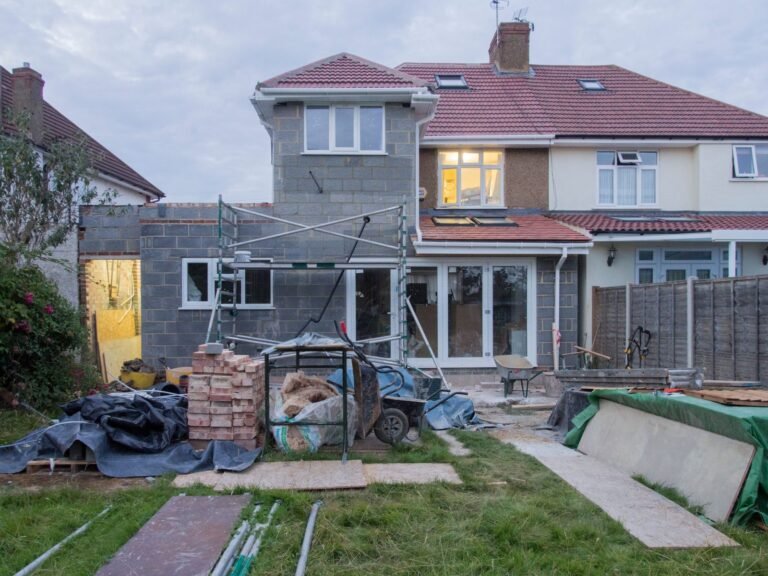
You do not have to finish work within three years, only to begin it. The law’s test is a material operation, a physical action that meaningfully changes the site. For a new build, pouring the first concrete foundation, laying the first brick or placing the damp-proof course counts. For an extension, starting structural work, removing a wall, erecting steelwork, or fitting the new roof structure, is a material operation. Small preparatory work does not count on its own: buying materials, erecting a hoarding, or clearing ground that might later be built over or simply backfilled. Demolition of an existing building can count if it is reasonably in pursuit of the permission, and digging the actual foundation trench for the new building counts too. Once a genuine material operation has started, the permission no longer expires through passage of time alone, though conditions can still bite.
How long does planning permission last, and when does the clock start?
The question ‘how long does planning permission take?’ is a different one from how long it lasts once granted, and the two clocks run separately. The three-year countdown starts from the date on the decision notice itself, the day the planning authority formally granted permission, not the day the letter happens to arrive. If no decision comes within the statutory period for a decision, usually eight weeks for a householder application and thirteen weeks for a major one, or a longer period agreed with the council in writing, you can appeal against non-determination. That appeal does not hand you permission automatically; it asks a planning inspector to decide the application instead, and the three-year clock then runs from the inspector’s decision date rather than your original submission. Anyone waiting at appeal stage should watch this closely, since the decision can land many weeks later and shorten the time left to start work.
Pre-commencement conditions and when you can start
A planning permission often carries conditions, and some are marked pre-commencement: they block the start of any material operation until discharged. A typical example asks for a detailed drawing of a boundary treatment, a tree protection plan, or a report on archaeology or contaminated land before work starts. You apply to the council to discharge each one, usually with evidence such as a drawing or specialist report, and the council has up to eight weeks to decide, though many respond sooner. Starting work before a pre-commencement condition is discharged is not just a breach that invites enforcement action: case law treats some of these conditions as going to the heart of the permission, so work begun in breach of one may not count as valid commencement at all, leaving the permission at risk of lapsing regardless of what was built. Treat discharge time as part of the programme, and run the Building Regulations application alongside it so neither holds up the start.
Outline permission and reserved matters
An outline permission grants permission in principle for a use or the siting of a building, with detailed matters left for later. The outline consent itself gives three years to apply for reserved matters approval, covering access, appearance, landscaping, layout or scale, whichever were reserved at the outline stage. Once reserved matters are approved, England’s default allows only two years from that decision to begin a material operation, a shorter window than full permission gives, so the approval date, not the original outline grant, sets the deadline. Stacked together, the two stages can run to five years from outline consent to a lawful start on a straightforward site, longer on a phased development where matters are reserved and approved in separate batches. Failing to apply for reserved matters within the first three years lets the outline permission lapse entirely, and a fresh application starts the whole process again from scratch.
- Full permission: three years from the decision date to start a material operation
- Outline permission: three years to apply for reserved matters approval
- Reserved matters approval: two years from that decision to start work (England)
- Pre-commencement conditions: must be discharged, usually within eight weeks of applying, before any material operation counts
- Non-determination appeal: the three-year clock runs from the inspector’s decision date instead
What happens when planning permission lapses and when to reapply
Once the three-year period passes without a material operation, the permission expires and has no legal effect: the land stands as though it was never granted, whatever was spent on drawings or quotes. Applying again means a fresh application, a fresh fee, fresh consultation and a fresh decision, and the council need not grant it again if policy or circumstances have moved on. In Wales the same Act sets a five-year default instead, and Scotland sets its own time limits under separate planning legislation. If you are close to expiry and not ready to build, a genuine material operation, such as a foundation trench dug in pursuit of the approved scheme and not as a token gesture, can lock the permission in, provided every pre-commencement condition has been discharged first. The safest habit starts the day the decision notice arrives: count back from the start deadline, allow up to eight weeks for each condition, and send in the discharge applications while the deadline is years away.