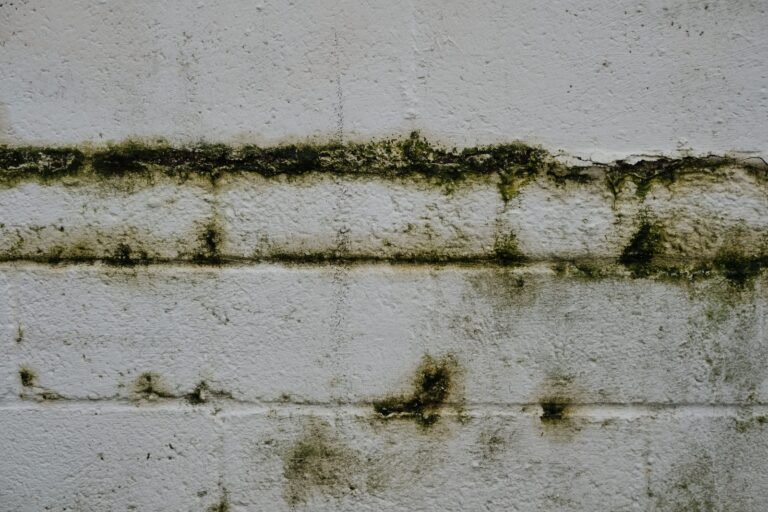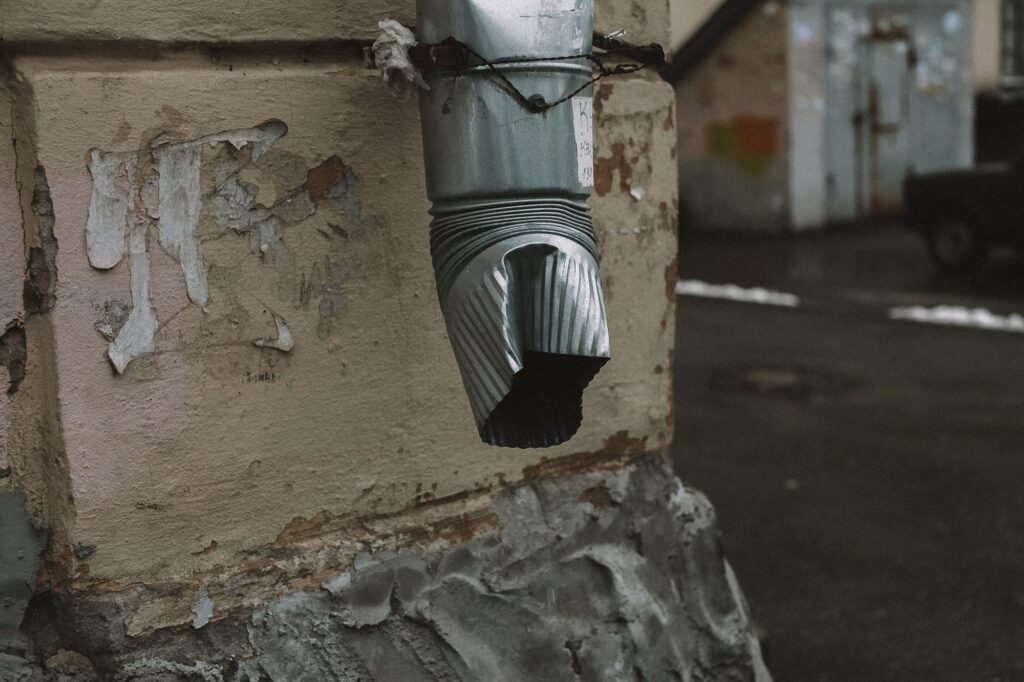
Water running down the outside wall in heavy rain finds its way indoors when gutters overflow, mortar fails, render cracks or a cavity is blocked. Unlike rising damp, which climbs from the ground, penetrating damp moves with the weather and is driven by rain and wind. Sealing the plaster from inside with a tanking coat or anti-damp paint only traps the water and hides it; the lasting fix blocks the path it takes from outside.
What is penetrating damp, and how it differs from rising damp and condensation
Rising damp draws water upward through permeable brickwork by capillary action, a slow process that marks the lowest part of the wall and typically stops around a metre above the skirting board. Condensation gathers on cold surfaces such as windows and outside corners, worse in cold weather where warm, moist air meets a chill, and it brings mould with it. Penetrating damp is different again: wet plaster that keeps time with the rain, appearing after a downpour and marking the wall wherever water has found a way through. It follows no rule of gravity except downward, so a stain under a bathroom or kitchen can point straight up to a plumbing fault in the room above rather than to the weather outside. A tide mark of salt staining means the damp has been there a while and has started depositing minerals as it evaporates; that is common with rising damp but also turns up where penetrating damp has been running through old, soluble mortar for months.
Where water gets in: gutters, mortar, render, sills and cavities
Start with the gutters and downpipes, since a blocked outlet or a cracked joint pours water straight down the face of the wall. Failed mortar comes next. Lime mortar on older solid-brick houses is meant to be softer than the brick and wear first, and years of frost and wetting eventually crumble it, opening gaps that wind-driven rain finds easily. Render spread over an old brick face can trap moisture behind it, so a cracked render leaves the brick beneath both wet and unable to dry out. Window sills that have lost their outward slope, or have a cracked or hollow mortar joint beneath them, pool water instead of shedding it. In a cavity wall, small weep holes in the outer leaf’s vertical mortar joints drain any water that gets past the brickwork; painted or mortared over, that water backs up and can reach the inner leaf. Airbricks do a different job, ventilating a suspended floor rather than draining the cavity, but both need to stay clear.
How to read the damp pattern and find where the water comes in
The shape of the damp tells the story. Standing outside during or just after heavy rain shows where water actually runs down the wall: a stain that drops straight from a gutter, downpipe or a defective sill points to the leak directly above it, while a patch widening toward the base can mean water is spreading sideways inside a cavity first. A mark indoors sitting directly below the fault is usually a direct hit; one that spreads wider at the bottom suggests water tracking along a wall plate before it shows. The Property Care Association’s guidance on penetrating damp makes the same point: identify the source first, then trace how the water has travelled. A small hole drilled in the plaster can help, since living damp smells different from a patch that dried out long ago, and a probe pushed through to the brick shows whether it is still soft underneath. An unheated cavity wall can stay wet for weeks before the damp finally shows indoors.
Repairs in the right order, and why only fixing the source works
The work starts outside, not in. Fix the gutter or downpipe, cut back and repoint failed mortar in a matching lime mix, repair the cracked render, or clear a blocked cavity, whichever the pattern of damp has pointed to. Only once that source is stopped should the wall be left to dry, and it takes longer than most people expect: a traditional rule of thumb for solid brick is one month of drying for every 25 mm of thickness, and longer again in cold weather. Cutting out and replastering before the wall is properly dry just seals the moisture back in, and a plasterer working to a deadline can be tempted to do exactly that. The next spell of heavy rain is the real test of the repair: if the stain stays away through a wet week, the source has been found, and only then is it time to book the plasterer. Fixing the source is what determines whether a repair lasts, not the finish that goes over it.
Why internal tanking and anti-damp paint cannot solve penetrating damp
Tanking is a waterproof seal applied inside the room, and it only works if that seal is flawless and stays flawless. A crack or puncture from a nail, a pipe run or a later knock defeats it, and repair means ripping it out again. It also leaves the brick behind it permanently wet, and wet brickwork decays while its wall ties corrode. Paint-based coatings share the same weakness: they hold only as well as the surface underneath them, and damp plaster will not hold paint at all, so the wall has to be dried and fixed before either treatment stands a chance. The maths favours fixing the source too. Repointing a wall or clearing a cavity usually costs far less than stripping and replastering a room, and the result lasts for decades rather than years. Where the outside fault really cannot be reached, a specialist can sometimes slow the damage with a ventilated lining, though even that will not fix the underlying problem.