A brown tide mark along the bottom of a wall looks like proof, and a damp meter pressed to the plaster will usually agree. Neither settles anything. Before paying for rising damp treatment, find out how the water gets in. Often it is soil or paving heaped against the damp-proof course, render carried down over it, a leaking gutter or plain condensation, and each is cured at its source without drilling the wall.
What is rising damp, and how often is it really the problem?
Rising damp is ground water drawn up through brick or stone by capillary action. The Property Care Association describes a wall wettest at the foot and drier higher up, often with a tide mark up to about 1 metre above the skirting; much above 1.5 m it is unusual. The RICS consumer guide on damp and mould calls ‘rising damp’ a term often misused and says failure of an original damp-proof course is extremely rare. For roughly 150 years most houses have been built with one, about two bricks above ground. Where such a wall is wet at the base, water has usually found a way past a course that still works. Older houses were built of materials that take in moisture and give it off, and Historic England says many gain nothing from a new course once the real source is dealt with.
Rising damp signs, and how condensation and penetrating damp differ
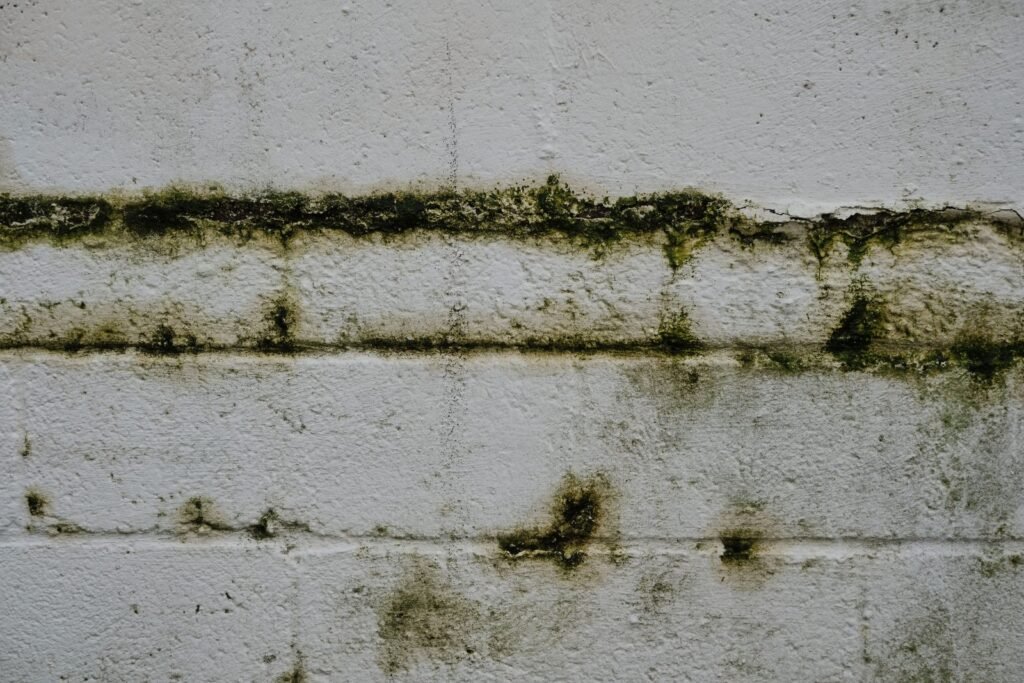
Where the damp sits tells you more than how wet it feels. The rising damp signs worth trusting stay low and run along the wall: a band of damp or salt-stained plaster just above the skirting, and skirting boards going soft behind the paint. Condensation gathers on the coldest surfaces instead. Mould around the windows and in the corners of outside walls is the usual giveaway, and it gets worse when people shower with the window shut or dry washing on a radiator. Penetrating damp keeps time with the weather. A patch under a leaking gutter joint or below a sill with no drip grows during heavy rain and just after it. Ten minutes outside in a downpour, watching where the water runs, tells you more than any reading on a dry afternoon.
A damp patch on a ceiling is never rising damp, and one at head height almost never is.
Why a damp meter reading is not a diagnosis
On its own, a damp meter proves very little. RICS points out that these meters are accurate in timber, but in plaster and brick other conductive materials can push the reading up. The Property Care Association’s own guidance goes further: a meter can show that a wall is damp but not where the water came from, and salts or foil-backed paper can fool it, as can condensation. Where there is real doubt, the test that settles it is destructive. Small samples are drilled out below the damp-proof course line and at intervals above it, then oven dried. The method in BRE Digest 245 also tells ground water apart from moisture that salts draw out of the air. For that, RICS suggests someone with nothing to sell: a building surveyor experienced in building pathology, working to JPS 2022, the joint position statement on moisture in traditional buildings.
Bridging: the usual reason damp gets past a damp-proof course
Bridging is water finding a way round the course. Raised ground is the first thing I look for: a patio laid over an old path, or a flower bed topped up year after year until the soil sits level with the course. Historic England’s maintenance checklist asks for ground at least 150 mm below any known damp-proof course or internal floor level, the same gap Building Regulations set for a new wall. Render carried down to the ground gives water another route, and cement render or pointing on an old solid wall can trap moisture behind it. Rubble does similar damage in a cavity or heaped under a suspended timber floor, where blocked airbricks also leave the joists damp. The fixes are dull: dig the ground back, cut the render off above the course. New paving can bring the problem back, so check the level whenever a patio or path is relaid against the house.
When is rising damp treatment worth paying for?
Injection is worth paying for only once the bridges are gone and the wall has had time to dry. LABC repeats the traditional rule of thumb: about one month per 25 mm of thickness in good drying conditions, so a solid brick wall around 225 mm thick takes roughly nine months. If drilled samples then still show the wall wettest at the base, the course may be missing or failed, and the Property Care Association says an injected chemical course is usually the most economical option. Either way, salts left by years of damp keep drawing moisture from the air, so contaminated plaster usually has to be replaced with a salt-resistant one, or the wall looks damp long after the water has stopped. When a firm quotes for injection, ask it to write on the quote where the water comes from and which test showed it. A quote that answers neither is selling you a product.