A mortar mix ratio has to suit the brick, not just the job. A rich, cement-heavy mix that grips a modern engineering brick and shrugs off driving rain will crack a soft, old brick once the wall moves or frost gets into a joint. A leaner mix matched to the brick wears out first and can simply be raked out and pointed again.
What is mortar, and what goes into the mix
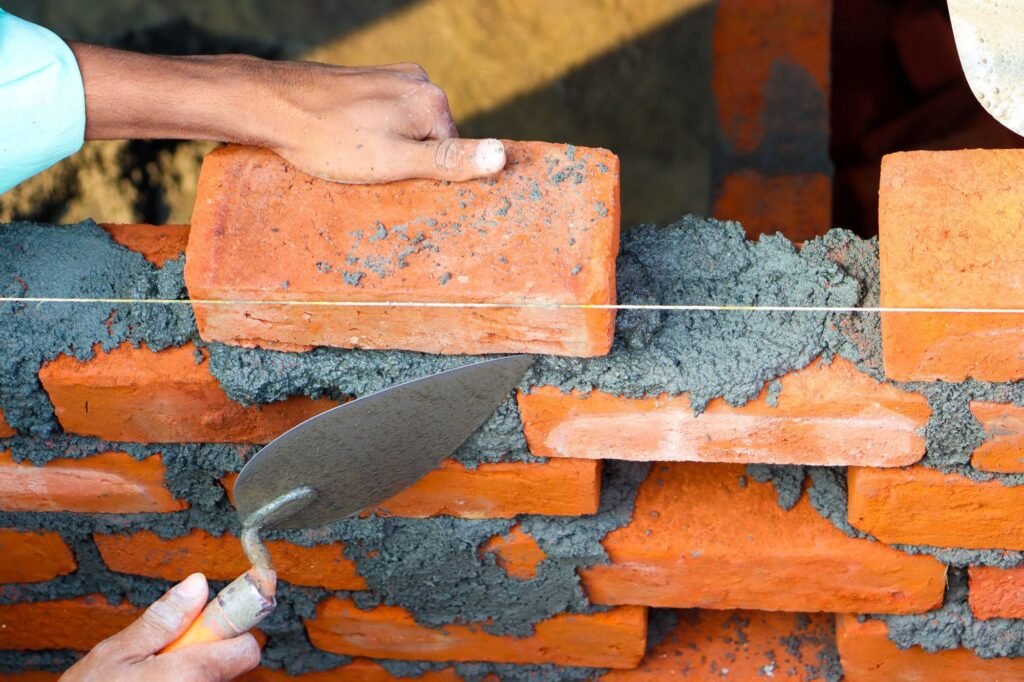
Mortar is nothing more than sand and a binder, mixed with water until it can be spread with a trowel and still hold its shape. The binder is Portland cement, lime, or a blend of the two, and the proportion of binder to sand sets how hard the joint goes off. Building sand, sometimes called soft sand, is the sand bricklayers actually use for mortar: its grains are fine and rounded, which makes a mix that spreads easily and grips the brick face. Sharp sand is coarser and angular, and it belongs in concrete, screed and paving mixes, not in bricklaying mortar; swap it in and the joint is harder to work and less forgiving to point neatly. A richer mix, with more cement relative to sand, sets stronger and more rigid, while a leaner one sets softer and more flexible. Matching the two to the brick in front of you, rather than to whatever is already in the mixer, is most of what choosing the right brick mortar mix comes down to.
Mortar mix ratios for the job in hand
There is no single mortar mix ratio that fits every wall; the right one depends on how exposed the brick is, how old and soft it is, and whether the job is structural or a repair. Builders’ merchants and bricklaying guides generally group ratios by how much weather and loading the joint needs to carry, running from a rich mix for the most exposed, load-bearing brick down to a lean mix for old or sheltered work, with lime kept as a separate route for traditional walls. None of these figures are exact science: a bricklayer adjusts for the particular brick and sand in front of them, and a small test panel is worth more than any table. What the ranges do give a homeowner is a sense of what a competent bricklayer should be specifying, and a reason to ask questions if a quote proposes the same rich mix for a Victorian cottage as for a new-build extension.
- Rich mix, around 1:3 cement to sand: heavily exposed or load-bearing brickwork, such as copings and chimney stacks, on sound modern brick.
- General mix, around 1:4 to 1:5: most everyday brickwork on houses built from the twentieth century onwards.
- Lean mix, around 1:5 to 1:6: older or softer brick, internal work and sheltered garden walls, where the mortar needs to give rather than resist.
- Lime mortar: solid-wall houses built before cement mortar was standard, where breathability matters more than raw strength.
Plasticiser or lime: two ways to keep mortar workable
A plasticiser is an additive, usually liquid, that traps tiny air bubbles through the mix so it stays workable for longer and spreads more easily in cold weather. It changes how the mortar handles, not how strong it ends up once set. Lime works differently. Lime mortar hardens slowly as it reacts with carbon dioxide in the air, not by the fast chemical set of cement, and the joint stays permeable and slightly flexible, so moisture can pass through it and out. That is what an old solid wall needs, since its joints are one of the main ways it dries. A lime mix is also leaner in cement, or has none at all, which is why bricklayers reach for it on historic brick and stone and seldom on a modern cavity wall. The two are not interchangeable: a plasticiser goes into a cement mortar, and a lime mortar is prepared and used on its own terms.
Why a mortar stronger than the brick causes damage
Old handmade bricks, especially those laid before the twentieth century, are usually softer and more porous than a modern engineering brick, and they sit in walls that soak up rain in a wet spell and give it back in a dry one. A cement-rich mortar sets hard and rigid, and once the wall moves slightly with temperature, settlement or frost, that rigid joint will not give. The strain has to go somewhere, and because the brick is weaker, it takes the load instead of the mortar. Historic England’s guidance on repairing older walls warns that impermeable, cement-based materials on a traditional wall can make it decay faster rather than slower. The damage shows as cracks running through the brick instead of along the joint, and as spalling, where the brick face breaks away, usually on the side that takes the worst weather. On a wall already damaged this way, the hard mortar has to be cut out with care before repointing, or the edges of the bricks come away with it.
Cold and wet weather limits for laying mortar
Mortar sets by hydration, a chemical reaction between water and cement that needs a few degrees of warmth to get going properly. Most bricklayers stop laying once the air temperature is close to freezing, and will not work at all if a hard frost is forecast before the mortar has had time to set; ice forming inside a fresh joint expands and can force it apart, leaving a weak, crumbly joint once it thaws out. Wet weather causes a quieter problem: driving rain can wash cement out of an unprotected joint before it sets, and mortar laid too wet slumps and loses its line. New brickwork is usually covered against rain and frost for the first day or so, with something breathable rather than plastic sheeting pressed straight onto the face. Skipping that step is exactly how a joint ends up crumbling within a few years, which is one of the more ordinary routes by which rain gets into a wall long after the scaffolding has come down.